 terravel
Terravel · Places · South America
Argentina · South America
Cueva de las Manos

What is Cueva de las Manos, and where is it?
Cueva de las Manos is a cave and rock art complex in Santa Cruz Province, Argentina, located 163 kilometers south of Perito Moreno in Patagonia. Named for hundreds of stenciled hand paintings on its walls, the site contains art created between 7,300 BC and AD 700 by pre-Columbian hunter-gatherers.
Location in the Pinturas River Canyon
The site sits at the base of a stepped cliff within the Pinturas River Canyon, part of the upper Deseado River basin in isolated Patagonia. Three gravel roads now provide access: a 46-kilometer route from Bajo Caracoles to the south, a 28-kilometer route from Route 40 further north, and a 22-kilometer route that ends with a 4-kilometer foot trail. In ancient times, people entered the canyon through ravines at elevations between 600 and 700 meters above sea level.
The canyon's topography shaped both settlement patterns and survival strategies. The Pinturas and Deseado Rivers once drained into the Atlantic Ocean and supported herds of guanacos, the primary food source for Paleoindians. As glacial ice fields melted and the Baker River captured eastward drainage, water levels in these rivers declined, eventually leading to the site's progressive abandonment. The canyon walls block strong westward winds common to the region, creating a microclimate less severe than surrounding Patagonia.
Volcanic Rock Formation and Cave Structure
The cave lies within canyon walls composed of ignimbrite and other volcanic rocks from the Bahía Laura Group, formed approximately 150 million years ago during the Jurassic period as part of the Deseado Massif. The Pinturas River, fed by glacial runoff, carved the canyon through differential erosion—a process in which weaker rocks erode away faster than stronger ones. The cave itself formed at a fissure where the river eroded more intensely than the surrounding canyon wall.
The cave extends about 20 meters deep with a northeast-facing entrance measuring approximately 15 meters in height and width. The interior ground slopes upward, reducing the ceiling height from an initial 10 meters to no more than 2 meters at the back. Paintings span roughly 60 by 200 meters across the cave's interior and surrounding cliff faces. Two outcroppings and the walls flanking the entrance also bear artwork, creating a complex of multiple surfaces for artistic expression.
Thousands of Years of Hand Stencils and Hunting Scenes
Over 2,000 handprints cover the cave walls, created by stenciling negative images and some positive prints using bone pipes to spray pigment. The ratio of 829 left hands to 31 right hands suggests most artists held the spray pipe in their right hand. Some handprints show missing fingers, possibly indicating necrosis, amputation, deformity, or intentional sign language. Handprints appear in dense, layered palimpsests in some areas and as purposefully isolated images in others, with the varying rock surface depth creating different visual effects depending on viewer position.
Beyond hands, the artwork depicts guanacos, rheas, felines, deer, and geometric shapes including zigzag patterns and sun representations. Hunting scenes show naturalistic portrayals of game drives and bolas use. Red dots on ceilings likely resulted from throwing pigment-soaked bolas upward. The wildlife depicted—particularly guanacos—remains present in the area today. Repeated scenes of guanacos surrounded by hunters suggest this was the preferred hunting tactic, reflecting the animals' central importance to survival and culture.
Archaic Period Art Spanning Nine Millennia
The earliest rock art at the site dates to around 7,300 BC, making Cueva de las Manos the only site in the region with art of this age. The paintings were created in several waves until approximately AD 700, during the Archaic period of pre-Columbian South America. Age determination relied on radiocarbon dating of the artwork itself, remains of bone pipes used to create the stencils, and stratigraphic dating including fallen rock fragments bearing art. Scholars classify the artwork into four stylistic groups—A, B, B1, and C—with group A subdivided into five color-based series (A1 through A5) spanning from 7,300 BC onward.
Early works were naturalistic and dynamic, depicting hunting with ambush and surround tactics. Over time, depictions became increasingly abstract. Group A introduced aerial and hierarchical perspectives, contrasting colors to differentiate representations, and innovations that influenced later artistic styles through at least 5,400 BC. The Toldense people inhabited the caves until the third or second millennium BC, with later groups possibly being ancestors of the Tehuelche tribes. Seasonal occupation patterns followed guanaco birth cycles and vegetable abundance at different elevations.
Hunter-Gatherer Life and Uncertain Artistic Purpose
Archaeological evidence reveals a hunting-gathering economy dependent on guanacos, supplemented by edible vegetables, tubers like rush root, fruits from Berberis plants, and medicinal plants. Hunting methods included bolas, ambushes, and game drives that funneled guanacos into ravines. Projectile points, bola stone fragments, side-scrapers, and fire pits have been found alongside remains of guanaco, puma, fox, and birds. The presence of obsidian—not naturally occurring in the region—indicates trade networks with distant tribal groups. Beginning around 7,500 BC, the site became an important landmark in seasonal migration circuits connecting Pinturas Canyon, the Central High Plateau, and Andean forest-lake environments at various elevations.
The exact purpose of the artwork remains unknown. Some scholars suggest religious or ceremonial functions alongside decoration. Others propose the handprints represent a desire to be remembered, though this interpretation is disputed. Jean Clottes argues prehistoric shamanism offers the most plausible explanation, though he acknowledges limitations. Additional hypotheses include boundary markers showing territoriality, aggregation sites for cooperation, or hunting magic intended to influence animal availability. The fact that many people contributed to the artwork over thousands of years indicates significant cultural importance, though the specific meaning remains beyond archaeological certainty.
Where is Cueva de las Manos?
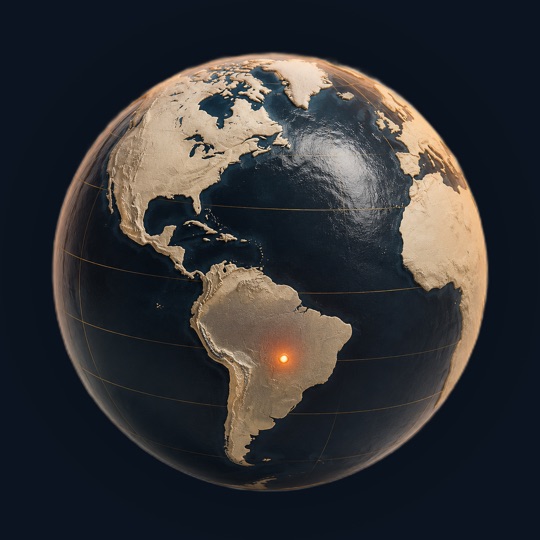
Cueva de las Manos is in Argentina, South America, at 47.15°S, 70.67°W. The closest places in the Terravel atlas are Chiloé Island (562 km), Atacama Desert (2,522 km) and Iguaçu National Park (2,782 km).
Photos of Cueva de las Manos

Photo: LuigiStudio · CC BY-SA 4.0

Photo: Maclemo · Public domain

Photo: LuigiStudio · Public domain
Cueva de las Manos at a glance
Questions about Cueva de las Manos
How do archaeologists know when the handprints were made?
Age was determined through multiple methods: radiocarbon dating of the artwork itself, analysis of bone pipe remains used to spray pigment, and stratigraphic dating including fallen rock fragments bearing art. Chemical analysis of pigments and study of stylistic overlaps verified authenticity. These techniques established creation dates spanning from 7,300 BC to AD 700.
Why are there so many more left hands than right hands?
The ratio of 829 left hands to 31 right hands suggests most artists held the bone spray pipe in their right hand while stenciling their left hand against the rock. This indicates a consistent artistic technique across thousands of years of occupation.
What pigments did the artists use?
Mineral pigments included iron oxides for reds and purples, kaolin for white, natrojarosite for yellow, manganese oxide for black, and copper oxide for green. Haematite, goethite, green earth, quartz, and calcium oxalate were also detected. Gypsum was used to help pigments adhere to rock surfaces. The binder remains unknown.
Why did people stop living at the cave?
As glacial ice fields melted, the Baker River captured the drainage of eastward-flowing rivers. This reduced water levels in the Pinturas and Deseado Rivers, making the area less attractive for hunting guanacos. The site was progressively abandoned, with final occupation around AD 700.
What is the current climate like at Cueva de las Manos?
The area experiences a cold, dry precordilleran steppe climate with very low humidity. Annual precipitation ranges from less than 20 millimeters to 200 millimeters depending on measurement. Average temperature is 8°C, with July averaging −3°C and February averaging 21°C. The canyon blocks strong westward winds, making winters less severe than surrounding Patagonia.
Sources and further reading
This article was written from the reference material below, retrieved and reviewed for source alignment on September 13, 2026. Use official local sources for changing access or travel information.
About this page. Terravel combines its curated place catalog with credited photography and geographic reference data. Practical travel details can change; use the linked destination guide and official local sources when planning a trip. Send a correction.
Test yourself
Which South American cave holds thousands of stenciled hand paintings dating back 9,000 years, created with bone spray pipes?
Cueva de las Manos in Argentina is famous for its hundreds of hand stencil paintings created between 7,300 BC and AD 700 using bone pipes to spray paint, a technique confirmed through radiocarbon dating.
Can you place today's?
Cueva de las Manos is one of 266 places in Terravel. A new one every morning.


